PUBLISHED
Chapter One
Why Getting Things Wrong is a Good Thing
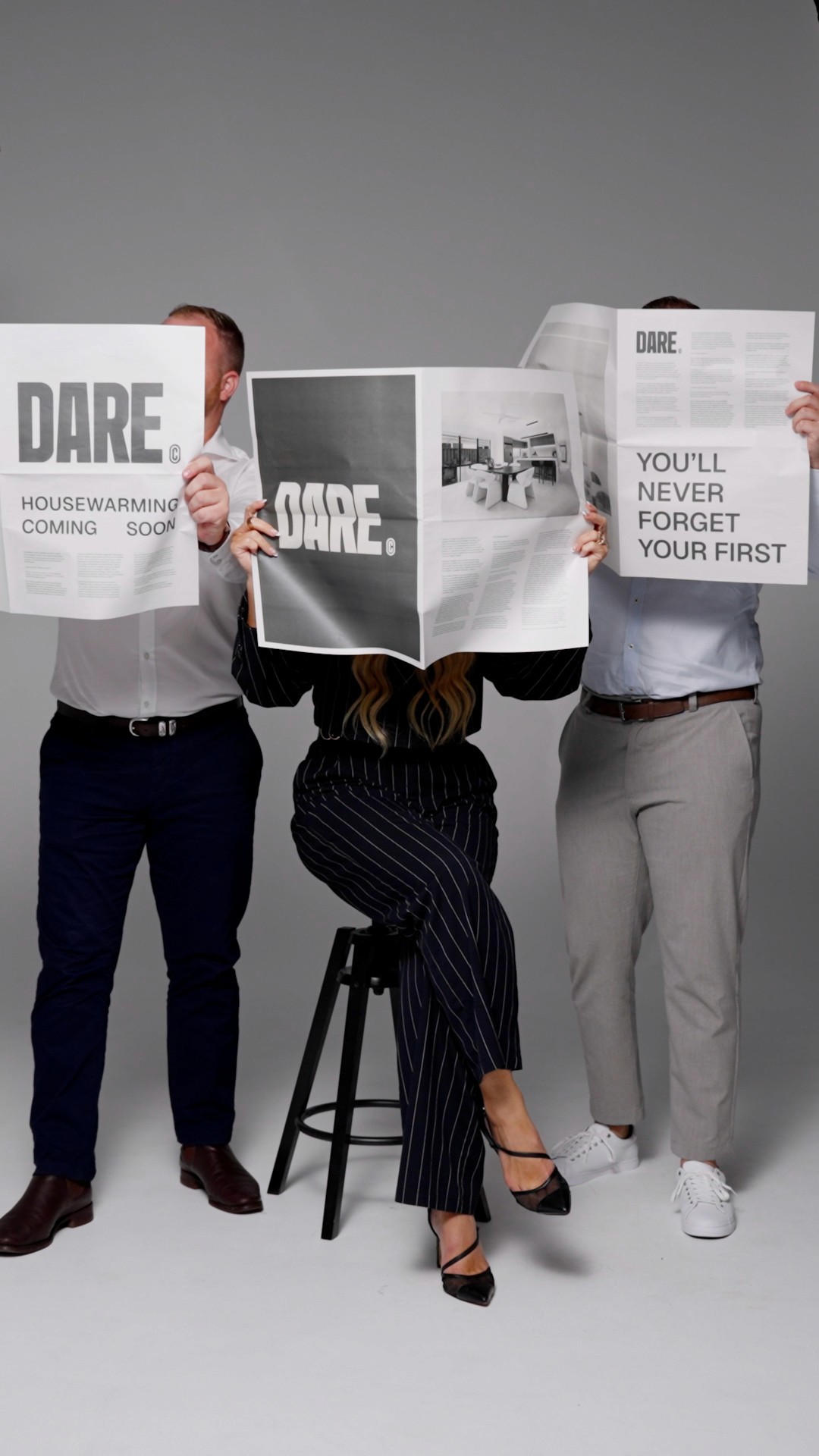
When we started DARE®, we assembled what we like to think of as a bit of all star cast. Builders, supervisors, estimators, designers, and sales advisors with decades of experience between them, all of whom could tell you exactly how a home gets built and sold. In fact, between them all, they would've won just about every award you could think of. Then we asked them to forget most of it. Not the skill or the craft, but the “that’s just how it’s done” part. We challenged them to rewrite the rules, and what we didn’t expect was just how many different ways there are to do that. At first, it felt a bit like asking a chef to cook without a recipe. Everyone in the room knew the old way worked, because they’d been doing it successfully for years. So the first few conversations were full of polite nods, a few raised eyebrows, and plenty of “yeah, but”. Why do customers wait weeks for a price? Why do inclusions feel like a guessing game? Why does building a home have to feel so complicated for the person paying for it? Nobody had a bad answer. Most of the time, the answer was simply that nobody had ever asked. Once the questions started, they didn’t stop. One conversation about pricing became a conversation about inclusions, which became a conversation about how we talk to customers, which somehow ended with a whiteboard full of arrows and at least three people talking at once. Every rule we pulled apart seemed to be connected to five others. Change one thing and suddenly the estimating team, the sales team and the site team all needed to do something differently too. That’s when it clicked for us. Rewriting the rules isn’t a single decision you make on day one and tick off. It’s a habit, a way of looking at every part of the business and asking whether it’s there because it’s right, or just because it’s always been there. And with a team this experienced, there was never going to be just one way to answer that.
Chapter Two
There’s more than one way to skin a roo
That’s the part nobody warns you about. Doing things differently doesn’t happen once, it happens every day. When the old way isn’t the answer anymore, there’s no manual to fall back on and no “this is how we did it last time.” Our team has had to think differently, plan differently, and sometimes let go of processes they’ve trusted for years. A supervisor who has run sites the same way for a decade suddenly needs to explain each step to a customer. An administrator who used to work behind the scenes is now part of the conversation. None of that comes naturally at first, and we’d be lying if we said it was always comfortable. Not every idea has worked either. Some sounded brilliant in a meeting and fell apart the moment they met a real site, a real supplier or a real deadline. Others took three or four attempts before they stuck. We’ve learned to be fine with that. Getting something wrong and fixing it quickly teaches us more than getting it right by accident, and we’d much rather try something new and adjust than stand still because it feels safe. What we’re most proud of is the culture that’s grown out of it. Some of our best changes have started with someone saying “this doesn’t make sense anymore, what if we tried it this way?” It might be a new team member seeing something with fresh eyes, or someone who has done the job for twenty years finally saying out loud what they’ve always thought. Either way, we’ve learned to ask ourselves "is there a better way to do this", because there usually is.
Chapter Three
The People Who Teach us the Most
Every walkthrough, every Foundation Call, and every bit of feedback has changed something, whether that’s a floorplan, an inclusion or the way we explain a contract. Customers ask the questions we’ve stopped noticing. Why is that wall there? What does that line in the contract actually mean? Can we do this instead? Each of those questions is a small chance to make the process clearer for the next person who walks through the door. Some feedback has been glowing and some has been honest enough to sting a little. We’re grateful for both. The kind words remind our team why the extra effort is worth it, and the tough ones show us exactly where we still have work to do. Living by NOTHING TO HIDE® means we can’t just share the good bits, and it also means we can’t ignore the not so good bits when they’re pointed out to us. Then there’s the industry around us. Our trades, suppliers and partners have been building homes far longer than DARE® has existed, and they’ve had to be patient as we ask “why?” more often than most. Plenty of them have pushed back, and plenty have shown us that some of the old rules are there for a very good reason. That’s been just as valuable. Rewriting the rules was never about throwing everything out. It was about understanding what works, keeping it, and having the courage to change what doesn’t. Anyway, if you made it far enough to read this, thanks for being part of the journey with us. I promise no matter how big we get, we’ll keep sharing what we learn along the way, the good bits and the tough stuff. Because while every home we build has a practical completion date, this company never will. We’ll always be a little bit under construction, and honestly, we wouldn’t have it any other way.
Stay Social